How to Recycle Plastic: A Beginner's Guide
If plastic recycling seems tricky, you’re not alone. This simple guide will show you what to look for and how to recycle plastic the right way.

.png)
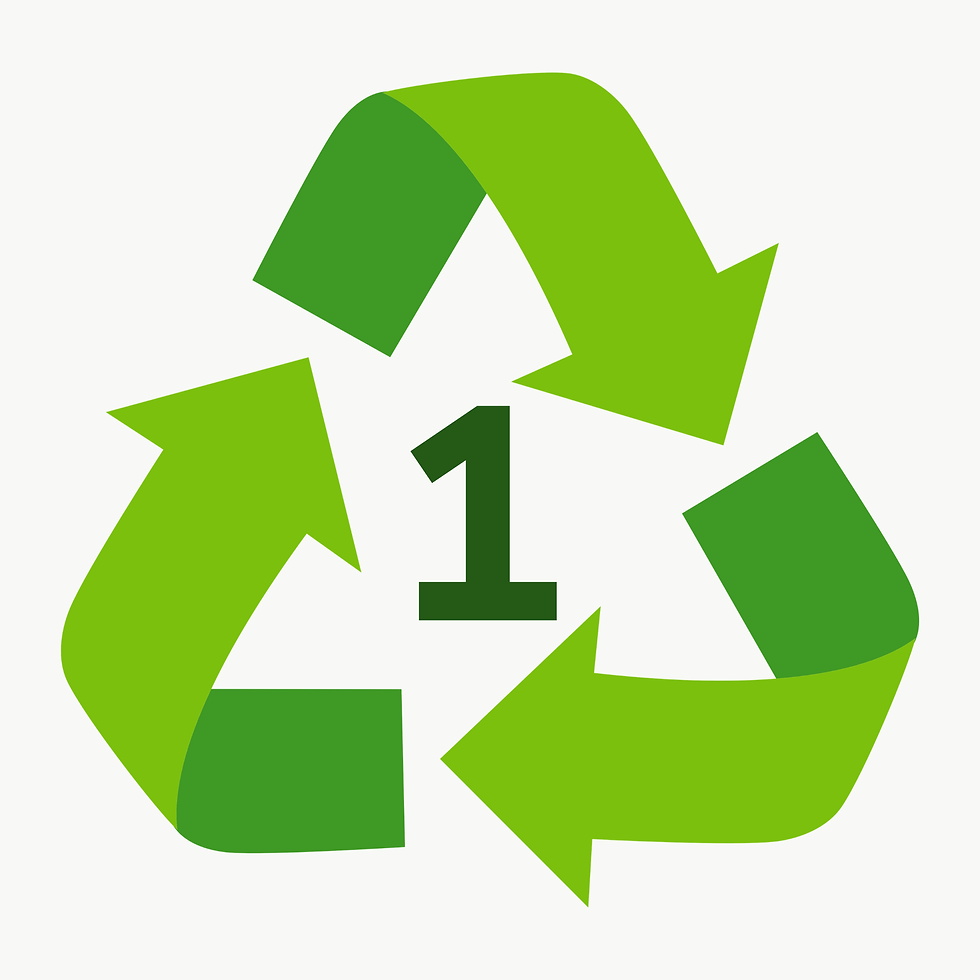
#1 PET or PETE
Bottled water, soda, and peanut butter jars. Recycling Note: Widely accepted in almost all curbside bins.
.png)
#3 PVC
Cling wrap and plumbing pipes. Recycling Note: Rarely accepted in curbside bins; check specialized facilities.
.png)
#5 PP (Polypropylene)
Yogurt containers and syrup bottles. Recycling Note: Increasingly accepted curbside; check local rules.
Understanding Plastic Types
Not all plastics are created equal. Local programs use numbers 1–7 to identify what they accept. Here is a simple guide to what they mean for your recycling bin.
.png)
#7 Other
Nylon, acrylic, or 5-gallon water jugs. Recycling Note: Hard to recycle; almost never accepted in curbside programs.
.png)
#2 HDPE
Milk jugs, detergent bottles, and shampoo. Recycling Note: Highly recyclable and widely accepted.
.png)
#4 LDPE
Grocery bags and bread bags. Recycling Note: Not for curbside; use grocery store drop-off bins instead.
.png)
#6 PS (Polystyrene)
Styrofoam, plastic cutlery, and takeout containers. Recycling Note: Rarely accepted curbside; usually goes to landfill.
How to Prepare Plastic for Recycling
Follow these simple steps at home to ensure your plastic items are ready for the bin. Proper preparation prevents contamination and helps more material get recycled.
01
Empty and Rinse
Leftover food and liquids can ruin entire batches of recycling. Give your bottles and containers a quick rinse to remove residue. They don't need to be dishwasher-clean, just free of visible debris.
02
Remove Caps and Labels (If Required)
Check your local guidelines. Many modern facilities allow caps to stay on if they are screwed tight, but some still require them to be removed. Large paper labels should be peeled off if possible.
03
Check the Number
Look for the resin identification code (the number inside the triangle) on the item. Most curbside programs in the US accept #1 (PET) and #2 (HDPE). Keep other types separate for drop-off at a recycling center.
Where to Recycle Plastic

Curbside Bins: The easiest way to recycle. Check your local US municipality's list to see which numbers (Plastic #1, #2, etc.) they accept directly from your home bin.

Community Drop-off Centers: For plastics that are not accepted in curbside recycling, local recycling centers often accept a wider variety of plastics. These centers are especially useful for bulky plastic items or less common plastic types.

Retail Take-Back: Many U.S. grocery stores and large retailers provide collection bins for plastic film items, such as grocery bags and produce wraps, which should not be placed in curbside recycling bins.
DON'T WISH-CYCLE • NO PLASTIC BAGS • NO FOOD RESIDUE • CHECK LOCAL RULES

No Plastic Bags
Do not place plastic bags in recycling bins. Plastic bags can tangle in sorting machinery at recycling facilities, causing equipment delays and shutdowns.

Dirty Containers
Food residue can contaminate other recyclables, especially paper and cardboard. Empty and rinse containers before placing them in the recycling bin.

Wish-cycling
Putting questionable items in the recycling bin "just in case" can do more harm than good. If you are unsure whether something is recyclable, check local guidelines or throw it away in a regular trash bin.
An Important Note on Local Rules
Recycling guidelines can vary depending on your local program. To ensure you are recycling correctly, always check your community's official rules on your city's waste management website or local sanitation page.
- [your city] recycling guide
- What can I recycle in [your city]?
- [your city] waste management recycling rules